Coron is one of the most famous wreck-diving destinations in the Philippines. Beneath the waters around Coron Bay and Busuanga lies a remarkable collection of Japanese ships sunk during World War II — now artificial reefs covered with coral and surrounded by schools of tropical fish. But Coron isn't only for experienced wreck divers.
Yes — particularly if you are interested in wreck diving. What Coron offers is not one signature dive but a cluster of large, intact, historically specific ships within an easy boat ride of one town.
Depending on the site, divers can see intact ship structures, cargo holds, machinery, cranes, boilers, engine rooms, coral growth and large schools of fish. The wrecks have had more than eighty years to become reefs, so a Coron dive is simultaneously a historical site and a marine one.
Some wrecks can be explored externally by recreational divers, while deeper sections and wreck penetration require more advanced training. That distinction runs through this entire guide and is the single most important thing to get right before you book.
Depending on your certification and comfort level, you can explore shallower wrecks, reef sites and one of the area's most unusual underwater environments — Barracuda Lake. A non-diving partner is not stranded here either: the shallow Skeleton Wreck is visible to snorkellers, which is why it appears on standard island-hopping itineraries.
Certified diving in Coron is booked directly with a dive centre, not through a tour platform — so be clear what this is. It is the full-day boat that reaches Skeleton Wreck and Barracuda Lake, two of the eight sites below, at snorkelling depth. It is the right booking for a non-diving partner, a surface interval day, or a first look before you commit to a dive package.
This is the itinerary that puts two of Coron's eight headline sites within reach of anyone who can swim. You snorkel the marine life living off Skeleton Wreck — a WWII Japanese ship sitting at around 5 m — then swim into Barracuda Lake and feel the thermocline for yourself: cool at the surface, hot as a spring at depth, exactly the temperature-layer effect that makes divers describe the lake as a geological dive rather than a marine one. Twin Lagoon's narrow limestone opening completes the day, with a Filipino-style lunch cooked by the crew at Smith Beach.
Coron's famous wrecks date from World War II, and they are all there for the same reason on the same date.
Japanese vessels sheltering around Coron Bay were attacked during a US air raid in September 1944. Several ships sank in the waters around Busuanga and Coron, and those ships now form the basis of the area's entire dive industry.
The wrecks went down together, in one sheltered bay, at a range of depths. That is why Coron can offer a shallow wreck a snorkeller can see and a deep military vessel for advanced divers within the same day's boat ride — an accident of history rather than dive-site design.
Diving is a full-day activity, so surface-interval days need filling: the reef snorkelling at Siete Pecados and Coral Garden, the limestone swim at Kayangan Lake and Twin Lagoon on Coron Island, the outer-island beaches at Malcapuya, Banana Island and Bulog Dos, the shallow Skeleton Wreck and Lusong Gunboat for non-divers, and the two land-based classics that keep you out of the water on your no-fly day before departure — Mount Tapyas and Maquinit Hot Springs.
Six WWII wrecks, one shallow wreck for beginners and snorkellers, and one lake that is not a wreck at all.
Okikawa Maru is frequently considered one of Coron's standout wreck dives. Its relatively shallow upper structure makes it more accessible than some of Coron's deeper wrecks, which is why it turns up on both introductory wreck itineraries and advanced ones. Experienced wreck divers may also find extensive penetration possibilities, but penetration requires appropriate training, buoyancy control, equipment and planning — it is not something to attempt because the opening looked inviting. Best for: one of Coron's most accessible major wrecks.
Akitsushima was a Japanese seaplane tender and now rests on its port side. One of its most recognisable features is the large crane lying beside the vessel — the detail every photograph of this wreck is trying to capture. The combination of large military vessel, machinery, marine life and substantial depth makes Akitsushima particularly appealing to advanced divers, and the depth is what puts it out of reach for everyone else. Best for: dramatic ship structure and experienced wreck divers.
Irako is often mentioned among the best wreck dives in Coron — but it is not one to treat casually. Depth affects bottom time, gas consumption, nitrogen loading and emergency options, and all four of those change the character of the dive rather than merely shortening it. For experienced divers, the combination of large wreck, history and marine life makes Irako one of Coron's strongest dive sites. Best for: experienced and advanced wreck divers.
Olympia Maru provides a useful middle ground between the shallower wrecks and Coron's deepest sites — the wreck most often used to build up to Akitsushima and Irako rather than jumping straight to them. Divers can explore the exterior, while properly trained wreck divers may investigate the large cargo holds. Best for: a relatively approachable large wreck.
Kogyo Maru is particularly interesting because portions of its cargo remain visible — the reason it reads as a historical site rather than simply a large object on the seabed. It suits advanced divers interested in wreck history, machinery and underwater photography, and it rewards a slower, closer dive than its size suggests. Best for: cargo, machinery and advanced wreck diving.
You may hear this wreck referred to as Morazan Maru or Ekkai Maru — both names refer to the same ship, which is worth knowing when you compare dive-centre itineraries. Because of its size, there is plenty to see without entering restricted parts of the wreck, which is what makes it workable across a range of experience levels. Best for: a large wreck and a range of experience levels.
Skeleton Wreck is very different from the giant WWII wrecks farther out in Coron Bay. It begins in shallow water and can also be viewed by snorkellers, which makes it particularly suitable for visitors who want to experience Coron's wreck-diving identity without immediately attempting a deep WWII shipwreck. It is also the site that appears on standard island-hopping boat days, including the Barracuda Lake, Skeleton Wreck and Twin Lagoon tour above. Best for: beginners and snorkellers.
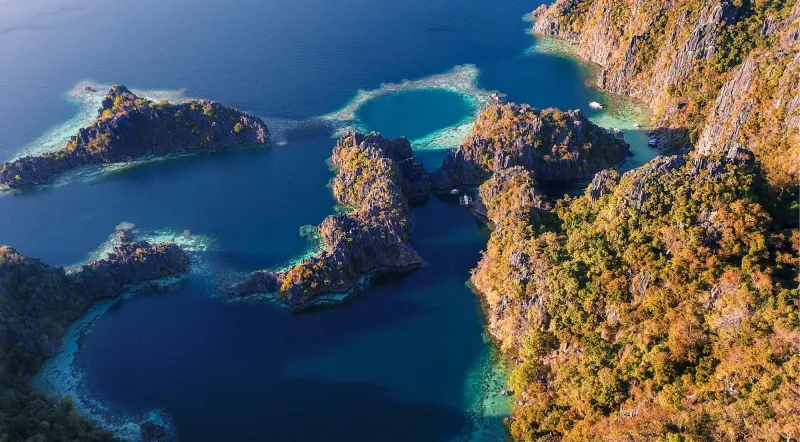
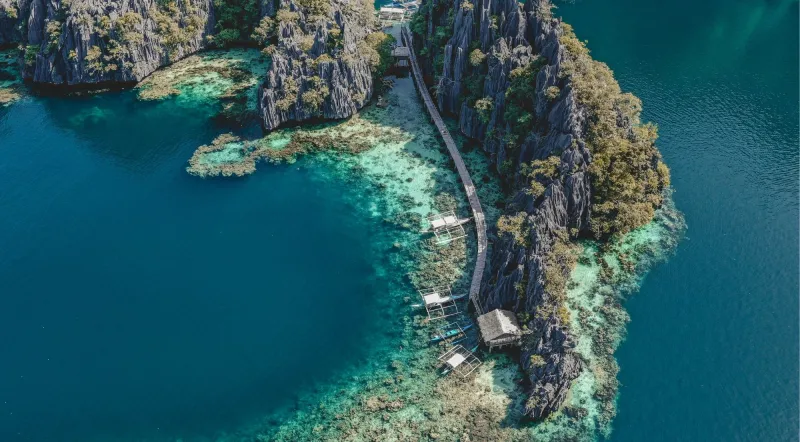
Barracuda Lake isn't a wreck at all. It is known for dramatic submerged limestone formations, very clear water, unusual temperature layers and thermoclines — the sensation of swimming from cool water into water that feels like a hot spring is the whole point of the dive. Think of Barracuda Lake as a geological dive rather than a marine-life dive, and don't judge it by fish count. Our lakes and lagoons guide covers it from the surface-swimmer's side. Best for: Coron's most unusual dive.
The most important point in this entire guide: don't choose the dive purely because it has the most famous wreck name.
Potentially suitable options include Skeleton Wreck, shallower sections of Okikawa Maru, reef dives, and Barracuda Lake depending on conditions. The qualifier on that last one is not decorative — Barracuda's suitability moves with conditions on the day.
Once depth and training stop being the limiting factor, the priority list opens up to Akitsushima, Olympia Maru, Kogyo Maru, Okikawa Maru, Morazan / Ekkai Maru and Irako.
Not for every dive. Some sites can be suitable for Open Water divers, but Advanced training greatly expands your options, because many major wrecks extend below standard beginner depth limits.
For simply viewing the outside of a wreck within your certification limits, a dedicated Wreck Diver certification isn't necessarily required. Wreck penetration is different and creates an overhead environment. If you are not trained for penetration: stay outside the wreck.
Yes. Coron has dive centres offering training from beginner level upward, so a certification course and the wrecks can sit in the same trip — though not in the same first few days.
Yes, some dive centres offer introductory experiences for non-certified divers. They are not the same as becoming a certified diver and do not automatically include deep wrecks. If the wrecks are why you are coming, budget for the certification rather than the taster.
| Level | Sites | The Limiting Factor |
|---|---|---|
| Snorkeller / non-diver | Skeleton Wreck, Siete Pecados, Coral Garden, island reefs | Nothing — book a standard island-hopping boat day |
| Open Water | Skeleton Wreck, shallower Okikawa sections, reef dives, Barracuda Lake (conditions permitting) | Depth limits, and currents at some sites |
| Advanced Open Water | Akitsushima, Olympia Maru, Kogyo Maru, Okikawa Maru, Morazan / Ekkai Maru, Irako | Bottom time, gas consumption and nitrogen loading |
| Wreck-certified | Interiors and cargo holds of the above | Overhead environment — training, buoyancy, equipment, planning |
If wreck diving is important to you, dedicate at least 2 full diving days. Three is better — and the third day is the one that makes the trip feel complete rather than rushed.
Okikawa Maru, Olympia Maru and a reef or shallower third dive. Start on the accessible upper structures and let the depth build.
Akitsushima, Kogyo Maru and another wreck appropriate to your certification. This is the day the trip is really for.
Barracuda Lake, Skeleton Wreck and a reef dive. Deliberately different in character from the two days before it.
A typical day may involve meeting at the dive centre, preparing equipment, boat travel, two or three dives, surface intervals and lunch. Don't book anything else into a diving day.
Coron's airport is a further 30–45 minutes from town — see the Coron airport guide — so plan your last dive and your flight with room between them.
Six practical questions that decide whether a Coron dive trip works, none of which are about the wrecks themselves.
Many divers favour the drier months, approximately November through April, when sea conditions and visibility can be more predictable.
Visibility varies according to weather, rain, current, tide, location and season. No single figure describes it, and any blog that gives you one is describing one day.
Some dive sites can experience currents — which is another reason certification alone doesn't determine whether a dive is appropriate on a given day.
Meeting at the dive centre, preparing equipment, boat travel, two or three dives, surface intervals and lunch. Treat a diving day as a full-day activity.
For most divers, yes. Dedicated dive resorts elsewhere around Busuanga can make sense if diving is the sole focus of your trip — our where to stay guide compares the two.
Book ahead if you're travelling in peak season, want a particular dive centre, are taking a course, need Nitrox, require unusual equipment sizes, or wreck diving is the main purpose of your trip.
Where the line actually falls between what you can see with a mask and what needs a tank — and what wreck diving adds to ordinary diving risk.
Certified diving in Coron is arranged directly with a dive centre rather than booked through a tour platform, so the operator you choose is entirely your own call. This is the list to run through before you commit.
Neither of these is a scuba dive — GetYourGuide's Coron listings are boat and snorkelling tours, and certified diving is booked with a dive centre. These are what to put in the days between dives, or on the days a non-diving partner is with you. Ratings checked on GetYourGuide 7 September 2026.
The only listing here that reaches WWII wrecks not covered above: the Lusong Gunboat, a ~35 m Japanese supply ship sunk on 24 September 1944 and resting at 10 m, and the East Tangat anti-submarine chaser, bow at 4 m sloping to 22 m — both shallow enough to snorkel. Lusong Coral Garden runs a strong current, so expect drift-snorkel conditions. Permits, entrance fees and a picnic lunch are included; the boat is open air, so bring a waterproof bag.
The highest-rated Coron listing on this site, and the one that lets you build the surface-interval day yourself: choose seven destinations from a list that includes Barracuda Lake and Kayangan Lake, on a boat reserved for your group. Useful when half your party is diving and half isn't, since the itinerary bends to whoever is aboard.
Wreck names, beginner options, certification requirements, Barracuda Lake and how many days to budget.
If you already scuba dive and have even a moderate interest in wrecks: absolutely.
For an Advanced diver — particularly one with wreck training — Coron is not simply somewhere to add a scuba dive to an island-hopping holiday.
The diving can be the main reason to come.
And if you are not certified, the honest answer is that Coron still works: Skeleton Wreck, Siete Pecados and Coral Garden are all snorkel-accessible, and Barracuda Lake's thermocline is felt from the surface as well as at depth. You just won't see Akitsushima, and there's no way around that except a certification course.
Where divers should base themselves, what the lakes are like from the surface, and how to reach Coron in the first place.
Certified wreck diving in Coron is arranged directly with a dive centre — we don't sell it and we won't pretend otherwise. What is bookable here are the boat days that fill your surface intervals and reach the two shallow sites a mask can handle: Skeleton Wreck and Barracuda Lake.
All tours book via GetYourGuide, with free cancellation up to 24 hours before. These are snorkelling and boat tours, not scuba dives. This site earns a commission when you book — see our affiliate disclosure.