CORON PALAWAN  ·  COMPLETE TRAVEL GUIDE  ·  2026

Coron Palawan Travel Guide: Things to Do, Places to Visit and What to Know

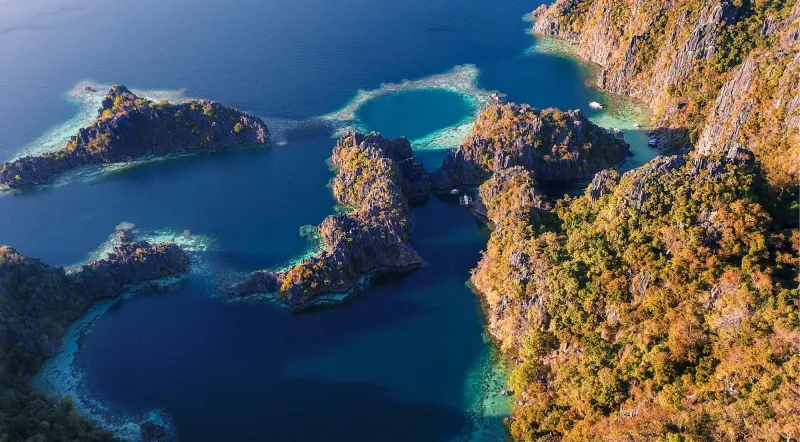
Coron combines limestone cliffs, exceptionally clear lakes, hidden lagoons, coral reefs, white-sand islands and some of the Philippines' most famous wreck-diving sites. Most travellers stay in Coron Town on Busuanga Island and explore the surrounding islands by boat — the landscapes usually associated with Coron, including Kayangan Lake and Twin Lagoon, are on Coron Island, just across the water.

4.93 from 799 reviews on the tour we recommend starting with
3 days Good minimum for a first visit
Dec–Feb Best months for general sightseeing
Mar–May Best months for diving & snorkelling
700+ Steps up Mount Tapyas to the viewpoint
~1h 15m Manila to Busuanga (Coron) by air
Coron, Palawan — the honest answer first

Is Coron Worth Visiting?

For most travellers visiting Palawan, yes — particularly if you enjoy swimming, snorkelling, diving or boat trips.

What makes Coron different from a conventional tropical beach destination is the variety of landscapes packed into a relatively small area. Instead of spending an entire trip on one beach, you can swim between limestone cliffs, snorkel above coral gardens, enter hidden lagoons, visit freshwater lakes and explore remote islands.

Coron is especially known for three things:

  • dramatic limestone lakes and lagoons
  • island-hopping and snorkelling
  • World War II shipwreck diving

The Philippines' official tourism guide highlights Kayangan Lake, Twin Lagoons, WWII wrecks, Siete Pecados Marine Park, Mount Tapyas and Maquinit Hot Springs among Coron's signature experiences. (philippines.travel)

If you only want a large resort and a beach directly outside your room, there are easier destinations. But if your idea of a great holiday involves getting on a boat each morning and exploring somewhere different, Coron is difficult to beat.

Coron's signature experiences at a glance

  • Kayangan Lake — the famous viewpoint and a clear, sheltered swim
  • Twin Lagoon — two lagoons joined by a narrow limestone opening
  • Barracuda Lake — thermoclines and underwater rock formations
  • Siete Pecados Marine Park — coral gardens and reef fish
  • Skeleton Wreck — a WWII ship shallow enough to snorkel
  • WWII wreck diving — Japanese vessels sunk in Coron Bay in 1944
  • Mount Tapyas — 700+ steps to a sunset viewpoint over town
  • Maquinit Hot Springs — warm salt-water pools among mangroves
  • Prices, ratings and entrance fees change — verify on GetYourGuide before you pay
Best Coron private boat tour  ·  ★ 4.93 / 5  ·  799 reviews

The Coron Boat Tour We Recommend Starting With

Almost everything in this guide is reached by boat. If you book one thing before you arrive, make it a full day on the water — check live dates and prices below.

⭐ Top Pick  ·  Operator Certified by GetYourGuide

Coron: Private Boat Hire with Guided Tour and Lunch on Beach

You meet your guide and crew at Lualhati Park beside the "I AM CORON" sign at 7:30 AM, and the day is yours to shape — choose from seven destinations including Kayangan Lake, Twin Lagoon and Barracuda Lake. The boat is reserved for your group alone, so the route, the pace and the length of every stop are decided by you rather than a fixed schedule. Lunch is cooked fresh by the crew on a beach. For a first visit, this is the itinerary this whole guide is built around.

8 hours
Lualhati Park, 7:30 AM
Private — your group only
Free cancellation (24 hrs)
Reserve now, pay later
Why we recommend it: at ★ 4.93 from 799 reviews it is the highest-rated Coron tour we list, and the private boat solves the one problem this guide keeps coming back to — crowd timing. A 7:30 AM departure reaches Kayangan Lake before the main joiner-tour wave. Entrance fees are paid separately in cash on the day: Kayangan ₱300, Barracuda ₱250, Twin Lagoon ₱200.
12 places and experiences worth your time

Best Things to Do in Coron

Lakes, lagoons, reefs, wrecks, outer-island beaches and two land-based classics — in the order most first-time visitors should prioritise them.

1. Visit Kayangan Lake

Kayangan Lake is probably the most recognisable attraction in Coron and one of the places most first-time visitors want to see. The lake lies among the steep limestone cliffs of Coron Island. Boats arrive at a small landing area, from where visitors climb a series of steps over the limestone ridge before descending to the lake. Partway up is the famous Coron viewpoint overlooking turquoise water framed by sharp limestone formations. Once you reach the lake, the main activity is swimming — the water is remarkably clear, and underwater rock formations are visible beneath the surface. Kayangan is included on many classic island-hopping tours, so you normally do not need to arrange a separate trip just to visit it. Best for: first-time visitors, swimming, photography and iconic Coron scenery.

2. Swim Through Twin Lagoon

Twin Lagoon is another of Coron's essential stops. As the name suggests, it consists of two lagoons surrounded by towering limestone cliffs. Depending on the tide, visitors can move between them through a narrow opening in the rock or use the steps provided beside it. The scenery is the main reason to visit: dark limestone walls rise almost vertically from clear blue-green water, creating one of Coron's most distinctive landscapes. Twin Lagoon is particularly enjoyable when visited before the busiest part of the day, which can be an advantage of booking a private rather than a standard group tour. The official Philippine tourism guide identifies Twin Lagoons as one of Coron's signature attractions. (philippines.travel) Best for: swimming, scenery and couples or families who want an easy water-based experience.

3. Explore Barracuda Lake

Visitors looking for something slightly different should consider Barracuda Lake. Like Kayangan, it sits inside the dramatic limestone landscape of Coron Island, but Barracuda has become particularly popular among divers and freedivers. One of its unusual features is its thermocline, where water temperatures can change noticeably at different depths. You do not need to be a diver to enjoy it — swimming and snorkelling are possible too, although its underwater rock formations make it particularly interesting beneath the surface. Best for: freediving, scuba diving, swimming and underwater photography.

4. Go Island Hopping in Coron

Island hopping is the experience around which most Coron trips are built. Instead of travelling independently between attractions, visitors usually join a full-day boat tour from Coron Town. Different itineraries combine lakes, lagoons, snorkelling sites and beaches, with time for swimming and snorkelling at each one and lunch during the trip. Common destinations include Kayangan Lake, Twin Lagoon, Barracuda Lake, Siete Pecados, Skeleton Wreck, Coral Garden, CYC Beach, Malcapuya Island, Banana Island, Bulog Dos and Pass Island. You will find both shared Coron island-hopping tours and private boat tours. Shared tours are normally the simplest and most economical choice for solo travellers and couples; private tours cost more but give you considerably more control over your schedule.

5. Snorkel at Siete Pecados

Siete Pecados Marine Park is one of the best-known snorkelling areas close to Coron Town. Rather than being primarily about beaches or limestone scenery, this stop is about what lies under the water. Coral formations and tropical fish make it a good introduction to Coron's marine life, particularly for travellers who do not scuba dive. The Philippine tourism authority describes Siete Pecados as one of the area's important coral-garden sites. (philippines.travel) If snorkelling is one of the main reasons you are visiting Coron, check your chosen tour itinerary rather than assuming every island-hopping tour visits the same reefs.

6. Snorkel at Skeleton Wreck

Coron's reputation for shipwrecks isn't limited to experienced scuba divers. Skeleton Wreck — a WWII Japanese ship resting at about 5 m — is shallow enough to be viewed by snorkellers, making it one of the easiest ways for non-divers to see one of the area's wreck sites. Visibility varies according to weather and sea conditions, but when conditions are good you can see the remains beneath the surface while snorkelling. It is frequently combined with nearby reefs, lakes and lagoons on the classic Barracuda Lake, Skeleton Wreck and Twin Lagoon joiner tour. Best for: snorkellers who want to see something different from reefs and beaches.

7. Discover Coron's WWII Wreck Diving

Coron is considered one of the Philippines' standout destinations for wreck diving. Several Japanese vessels sank in the waters around Coron during World War II and now form major dive sites; over decades, many have developed into artificial reefs populated by marine life. The official Philippines tourism guide describes Coron Bay as the resting place of Japanese supply vessels sunk in 1944 and identifies wreck diving as one of Coron's defining attractions. (philippines.travel) Different wrecks require different levels of experience — some dives allow you to observe a wreck externally, while penetration of enclosed areas requires appropriate certification, training and conditions. If wreck diving is a priority, dedicate at least one full day specifically to diving rather than trying to combine it with a standard sightseeing tour.

8. Spend a Day on Malcapuya Island

After several days of lakes and limestone cliffs, Malcapuya Island provides a different side of Coron. The attraction here is the beach: pale sand, clear water and a more traditional tropical-island atmosphere. Malcapuya is farther from Coron Town than Kayangan Lake and Twin Lagoon, so it is usually included on itineraries exploring Coron's more distant islands. These trips are often sold as island escapade or outer-island tours and may combine Malcapuya with Banana Island and Bulog Dos. If beaches are more important to you than lakes, dedicating one day to this part of Coron is worthwhile.

9. Visit Banana Island

Banana Island is another popular stop on longer-distance island tours. The island offers clear water and opportunities for swimming and snorkelling, and it is frequently paired with Malcapuya Island on the same outer-island run. Despite the name, don't confuse it with other destinations called Banana Island around the world — when researching or booking, search specifically for Banana Island Coron.

10. Relax on Pass Island

Pass Island is another attractive option for travellers wanting white sand, turquoise water and snorkelling. Because many first-time visitors concentrate almost entirely on Kayangan Lake and Twin Lagoon, trips farther into the Calamian Islands can feel quite different from the classic Coron highlights tour. Pass Island may also be included on some diving and reef itineraries — it is the lunch stop on the reef-and-wreck snorkelling tour, which currently holds a low ★ 3.40 from only 9 reviews, so check its recent feedback carefully before booking.

11. Climb Mount Tapyas for Sunset

Not everything worth doing in Coron requires a boat. Mount Tapyas rises directly above Coron Town and is one of the easiest activities to arrange independently. A long staircase leads to the viewpoint at the top, where you can look across Coron Town, the harbour and surrounding islands. Late afternoon is particularly popular because temperatures are cooler and you can watch the sunset from the hill. The climb involves 700+ steps, according to the Philippines' official Coron destination guide. (philippines.travel) Allow more time than you think you need, particularly if you want to stop along the way.

12. Soak at Maquinit Hot Springs

After climbing Mount Tapyas or spending several days swimming and snorkelling, Maquinit Hot Springs offers a change of pace. The pools sit near the coast among mangroves and are filled with naturally warm salt water. Many visitors combine Mount Tapyas and Maquinit Hot Springs into one afternoon and evening excursion. This is also one of the easiest ways to add a land-based experience to a trip otherwise dominated by boat tours.
You might also enjoy

Two of the twelve above — Mount Tapyas and Maquinit Hot Springs — are land-based and often sold as a single sunset-and-soak excursion. Beyond them, Calauit Safari Park on northern Busuanga, the Coron to El Nido expedition boat, and dedicated WWII wreck dives on the Okikawa Maru and Lusong Gunboat are the additions most travellers wish they had planned for.

The choice that changes your whole day

Shared vs Private Coron Island Tours

Choosing between a shared and private tour can make a noticeable difference to your day. Here is who each one actually suits.

A shared island-hopping tour is usually best if…

You want to keep costs down; you are travelling alone or as a couple; you don't mind following a fixed itinerary; and meeting other travellers appeals to you. The main disadvantage is that many shared boats follow similar schedules, meaning popular attractions can become busy at roughly the same time.

A private boat tour is worth considering if…

You are travelling as a family or group; you want to leave earlier; you want more time at particular locations; you prefer a quieter experience; or photography is important to you. One of the biggest benefits is flexibility — a local boat crew may be able to adjust the order of stops to avoid some of the busiest periods, although access rules and opening arrangements at individual attractions still apply.

How to pick between near-identical itineraries

What Is the Best Coron Island Hopping Tour?

There isn't one Coron tour that is best for everyone — but there is a reliable way to choose between them.

For a first visit, prioritise an itinerary containing several of the signature Coron Island attractions, especially:

Kayangan Lake + Twin Lagoon + a good snorkelling site.

That combination gives you the clearest introduction to what makes Coron different from other Philippine islands.

If you have a second day available, choose an itinerary that complements rather than repeats your first tour. For example:

  • Day 1: Lakes, lagoons and reefs
  • Day 2: Malcapuya, Banana Island and other beaches

Divers may instead prefer:

  • Day 1: Classic Coron island hopping
  • Day 2: Wreck diving

This approach gives you much more variety than booking two tours containing largely the same attractions. For a stop-by-stop comparison of the three lakes themselves, see our guide to the best lakes and lagoons in Coron.

Three itineraries that don't overlap

The Coron Day Trips Worth Comparing

One classic lakes-and-wreck circuit, one outer-island beach day, one dedicated wrecks-and-reef run. Prices are per person unless noted; ratings checked on GetYourGuide 2 September 2026.

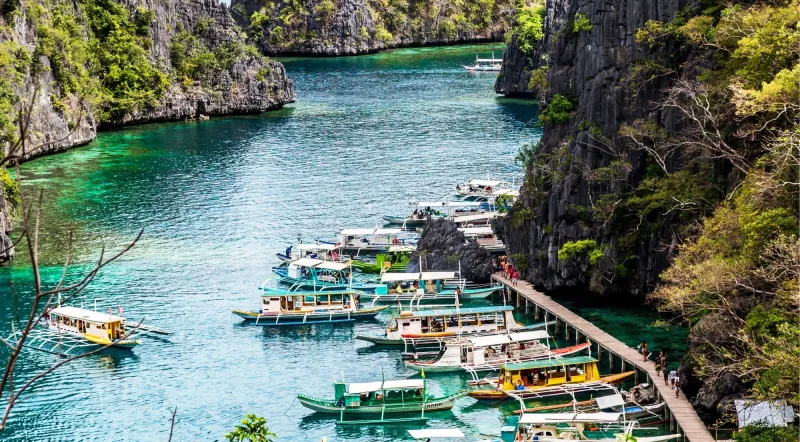
Colourful outrigger boats lined up at the Kayangan Lake dock, Coron Island Philippines

Coron: Barracuda Lake, Skeleton Wreck & Twin Lagoon

4.42 (275 reviews)

The cheapest way to cover the famous stops, and the only tour here with hotel pickup, snorkel gear, life jackets and lunch all included in the headline price. Note the itinerary: Skeleton Wreck, Barracuda Lake, a Filipino buffet at Smith Beach, a reef garden and Twin Lagoon — Kayangan Lake is not on it. English and Tagalog guides.

$33 / person
Check Availability
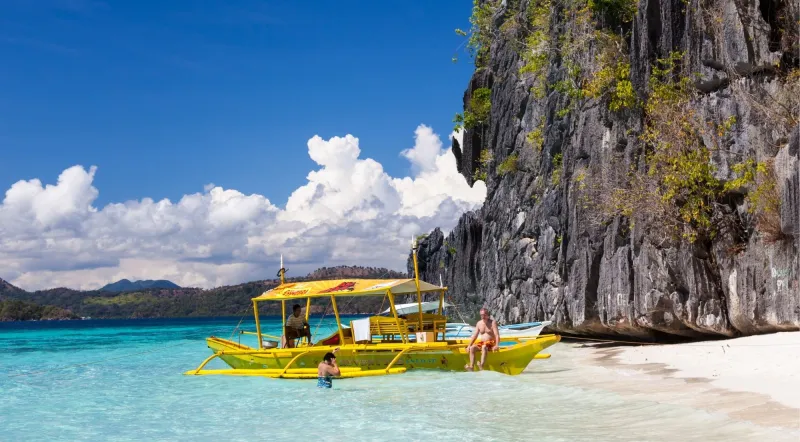
Yellow bangka boat moored at a white-sand beach with limestone cliffs, Coron outer islands

Coron: Coastal Cliffs, Beach & Malcapuya Island Hopping

4.53 (97 reviews)

The day-two answer if beaches matter more than lakes: Banana Island, Malcapuya and Bulog Dos in one run. Island entrance fees are included here — unusual in Coron, where they are almost always extra — along with a BBQ seafood lunch, snorkel gear and downtown hotel pickup. Rated suitable for families with young children.

$46 / person
Check Availability
Aerial view of Coron Bay, where Japanese WWII ships were sunk in September 1944

Coron: Reef and Wreck — 2 Japanese Wrecks & Pass Island

3.40 (9 reviews — check live rating)
Low rating and very few reviews — read recent feedback first

The only listing here built around the wrecks themselves: the Lusong Gunboat (a ~35 m Japanese supply ship sunk 24 September 1944, at 10 m) and the East Tangat anti-submarine chaser, plus drift snorkelling at Lusong Coral Garden and lunch at Pass Island. Permits and entrance fees are included. We list it because nothing else covers this ground — but at ★ 3.40 from 9 reviews it is the weakest tour on this page.

$47 / person
Check Availability
Two days, three days, or five

How Many Days Do You Need in Coron?

Boat days are long and weather can take one away from you. Plan accordingly.

2 days in Coron

Two days is possible but rushed. You can cover one classic lakes-and-lagoons circuit and one other day, with no margin at all if the sea is rough or a boat is cancelled.

3 days in Coron

Three full days is a good minimum for most first-time visitors. It gives you the classic Coron Island route, a second contrasting day of beaches or wrecks, and one day that can absorb bad weather or become Mount Tapyas and Maquinit Hot Springs.

4–5 days in Coron

Four or five days gives you a much more relaxed visit and enough time for lakes, lagoons, snorkelling, beaches, diving, Coron Town, Mount Tapyas and Maquinit Hot Springs — without treating any single day as compulsory.

Weather decides whether the boat leaves

Best Time to Visit Coron

Coron can be visited all year, and the tours run all year. What changes with the month is how likely your boat is to leave: an average March brings 15 mm of rain, an average July 522 mm. The dry, dependable stretch is November to April, and March offers the best balance of rain, humidity and crowds.

Plan for cancellations, not around them. Rough seas and Coast Guard advisories can cancel an island tour at short notice in any month. Booking with free cancellation and keeping one flexible day in your itinerary removes most of the risk.

Our best time to visit Coron guide has all twelve months with the national weather service's own figures, a date checker for your exact dates, and what the amihan and habagat monsoons mean for a boat day.

By air from Manila, or by sea from El Nido

How to Get to Coron

Most air travellers use Francisco B. Reyes Airport on Busuanga Island, often referred to simply as Busuanga or Coron Airport. The flight from Manila takes roughly an hour and a quarter, and vans and buses cover the 30–45 minutes from the airport into Coron Town — our Coron airport guide covers shared vs private transfers and arrival-day planning.

Another popular route is travelling between El Nido and Coron by ferry. The fast ferry crossing takes approximately 3.5 hours across 138 km of open water.

Never book a same-day ferry-to-flight connection. Crossings can be delayed or cancelled by weather without notice, and the sea between El Nido and Coron can be rough.
The single most common point of confusion

Coron Town vs Coron Island: What's the Difference?

They are two different places, and knowing which is which changes how you book everything else.

Differences between Coron Town on Busuanga Island and Coron Island
Coron Town Coron Island
Where it is On Busuanga Island, close to Francisco B. Reyes Airport. A separate island immediately south of the town, reached by boat across the bay.
What's there Most hotels, restaurants, dive centres and tour companies. Kayangan Lake, Twin Lagoon, Barracuda Lake and the limestone scenery Coron is famous for.
How you use it Your base — you sleep, eat and book tours here. A day trip. There is no tourist accommodation on Coron Island itself.
Palawan's two headline destinations

Coron vs El Nido

Neither is universally better. The right answer depends on what you actually want to do with your days.

Choose Coron if you want…

  • Freshwater lakes you swim inside limestone cliffs
  • WWII wreck diving and snorkelling
  • Snorkelling over coral gardens and shallow wrecks
  • Limestone lagoons reached only by boat

Choose El Nido if you want…

  • Bacuit Bay island hopping
  • A wider range of mainland beaches
  • A larger tourist scene
  • A walkable beach near your accommodation

If your itinerary allows enough time, visiting both El Nido and Coron gives you a much more complete Palawan experience — the two destinations are connected by a fast ferry of about 3.5 hours. For a fuller side-by-side on flights, in-town beach access and scenery, see the Coron vs El Nido comparison on our homepage.

Four questions to settle before you book

Where to Stay, When to Book, and Who Coron Suits

Accommodation, advance booking, non-swimmers and families — the practical answers.

Where to Stay in Coron

For most first-time visitors, Coron Town is the most convenient base. It is where the hotels, restaurants, dive centres and tour operators are, and where nearly every island-hopping boat departs from or collects you. Our guide to where to stay in Coron compares all five areas.

Do You Need to Book Coron Tours in Advance?

During busier periods, booking your most important tours in advance is sensible. Reserving ahead with free cancellation secures a place on the itinerary you actually want while leaving you free to change plans if the weather turns.

Is Coron Good for Non-Swimmers?

You can still enjoy Coron if you are not a confident swimmer, but it changes which activities will be most comfortable. Ask operators about life jackets and swimming requirements before booking.

Is Coron Good for Families?

Coron can work very well for families with children who enjoy boats and swimming. A private tour can be especially valuable because it gives you more control over timing — shorter stops, an earlier finish, or longer in the water where the children are happiest.

Pack this the night before

What to Bring on a Coron Island Tour

Boat days run eight hours with no shops. Cash is the item people most often get wrong.

Four days that never repeat themselves

Sample 4-Day Coron Itinerary

Lakes and lagoons, then beaches, then diving or snorkelling, then the land-based classics — each day deliberately different from the last.

Day 1 — Coron Island Highlights

Kayangan Lake, Twin Lagoon, Skeleton Wreck, Coral Garden and CYC Beach.

Day 2 — Beaches and Islands

Malcapuya Island, Banana Island and Bulog Dos.

Day 3 — Diving or Snorkelling

Certified divers can dedicate the day to Coron's WWII wrecks.

Day 4 — Coron Town and Land Attractions

Explore Coron Town, climb Mount Tapyas and finish at Maquinit Hot Springs.

Frequently asked questions about Coron

Coron Palawan FAQ

What Coron is famous for, whether three days is enough, and whether you actually need a tour.

Final thoughts

What Coron Actually Feels Like

Coron's appeal comes from moving between completely different environments: swimming beneath enormous limestone cliffs, snorkelling above a shipwreck, relaxing on a white-sand island and watching the sunset from Mount Tapyas.

For a first trip, plan at least three full days, make one classic Coron island tour your priority, and leave enough time to explore beyond Kayangan Lake and Twin Lagoon.

Book the Day That Makes the Trip

Almost everything in this guide is reached by boat, so the tour you book matters more in Coron than in most destinations. Compare the actual stops, the departure time, the group size and what the price does and doesn't include before you commit — and check whether entrance fees are extra.

All tours book via GetYourGuide, with free cancellation up to 24 hours before. This site earns a commission when you book — see our affiliate disclosure.